What is digital marketing
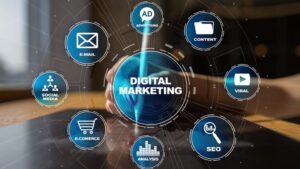
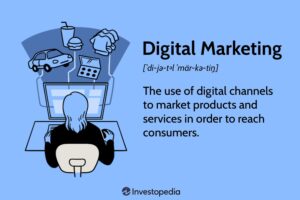
Digital marketing is the use of digital channels to market products to boost brand awareness, drive traffic, and hit marketing goals. Digital marketing promotes brands and connects them to potential customers via the internet. It takes many forms, including:
- Search engines
- Websites
- Social media
- Mobile apps
- Text messaging
- Web-based advertising
Digital marketing uses the same principles as traditional offline marketing. It relies on consumer data to find a business’s target audience and deliver the most relevant messaging possible.
Your company’s use of digital marketing depends on its model. Business-to-business (B2B) companies sell to other businesses, which requires a longer, more strategic approach. Business-to-consumer (B2C) companies sell directly to everyday customers, which requires shorter sales cycles and a larger audience.
The difference between B2B and B2C digital marketing.
- B2B decisions involve multiple people, while B2C typically only involves a single person.
- B2B clients tend to have a longer decision-making process, so digital marketing should focus on building relationships.
- The B2C buying process is generally shorter, so this requires short-term, urgent messaging.
- B2B transactions are more driven by logic, while B2C is driven more by emotion.
Fortunately, digital marketing works for both approaches. Whether you’re targeting businesses or consumers, digital marketing will help you streamline the marketing process for results.
The benefits of digital marketing.
Regardless of whether you’re a B2B or B2C company, digital marketing can help you get to know your audience, understand their pain points, and provide metrics that will give your marketing team credibility. Benefits include:
Reach a large demographic.
Digital marketing allows you to reach a wider customer base with less effort. When you post an ad online, it can reach anyone, regardless of their location. You can connect with customers on the other side of the world, in multiple time zones, seamlessly.
Cost efficiency.
Traditional marketing channels like TV, radio, and print media typically have higher costs than digital channels. Posting on social media and creating blogs doesn’t have a cost beyond the time you spend producing the content.
Results are measurable.
Digital marketing comes with a host of analytics opportunities that traditional marketing just can’t match. You can track the number of conversions and leads, visits to your website, and much more — giving you plenty of valuable insight to help grow your business.
Easier personalization for customers.
Because it requires so much data, businesses naturally learn a lot about their ideal customers during a digital marketing campaign. Thanks to this data, it’s never been easier to personalize your marketing campaigns. For example, you can segment customers based on their demographics and customize your messaging for each segment.
Opportunity to engage with customers at various stages.
With digital marketing, you can engage with customers at several points during the buying process. For example, you can create a paid advertising campaign and then follow up with those leads after they’ve made a purchase. This could be as simple as saying thank you or using it as an opportunity to upsell with related items or a subscription.
Easy and convenient conversions.
Thanks to its cross-channel connectivity, digital marketing makes it a cinch to increase conversions. Shoppers can move from a social media platform to your ecommerce store to make a purchase in just a few taps.
Aligns digital marketing efforts with business goals.
An aligned digital marketing strategy means your digital marketing efforts meet and work with your wider strategic goals such as revenue growth, brand awareness and customer retention. With digital marketing, you can focus on the right tactics for your company, refine strategies and set realistic marketing goals using data, and track important metrics across teams.
Is digital marketing the same as online marketing?
Importantly, digital marketing is not the same as online or internet marketing. Instead, these terms are a subset of digital marketing. Let’s explore these terms further.
Digital marketing.
As the umbrella term, digital marketing uses any digital channel, including television, radio, and digital billboards, as well as any marketing methods that rely on a phone, tablet, or computer and the internet. Marketing that requires the internet also falls into the more specific category of online or internet marketing.
Online or internet marketing.
A subset of digital marketing, online or internet marketing includes email, social media, SEO, and pay-per-click (PPC). The terms online marketing and internet marketing are interchangeable.
Challenges in digital marketing.
While digital marketing offers numerous benefits, it also comes with its own hurdles you need to navigate. Don’t let unforeseen challenges trip you up — try to be aware of the following:
- Changing algorithms. Platforms like Google and social media frequently update their algorithms, which can affect your SEO, paid campaigns, and visibility.
- Data privacy and compliance. With regulations like GDPR and CCPA, businesses must carefully handle customer data to stay compliant.
- Competition. Digital marketing has a low entry barrier, making it easy for competitors to flood channels and reduce visibility.
- Measuring ROI. While digital marketing offers analytics, tying specific campaigns to ROI can still be challenging, particularly for long-term strategies.
- Customer trust. With so much content available, gaining trust can be difficult. Brands need to deliver value and consistency to stand out.
By understanding these challenges, businesses can adapt their strategies and overcome obstacles with proactive solutions.
12 types of digital marketing.
There are many forms of digital marketing, from web pages to social media platforms and content creation. Some key types include:
Owned media.
1. Content marketing.
Content marketing aims to educate and share value to readers instead of promoting a product or service. It isn’t outwardly promotional but establishes your business as a thought leader and a trustworthy source of information.
Businesses use content marketing to attract leads and convert them into loyal customers. Content marketing forms include:
- Blog posts
- eBooks
- Newsletters
- Guides
- Infographics
- Audio content, like podcasts
- Video content, like YouTube Shorts
Content marketing is not only affordable, but it’s also effective. In 2022, 80% of marketers thought their content marketing strategy was very successful. It’s no wonder why the content marketing industry is projected to be worth $107 billion by 2026.
2. Email marketing.
Email marketing is a form of direct marketing where you reach out to your customers through strategic email messages. Email marketing can take many forms, but the more common types of emails businesses send include blog subscriptions, newsletters, welcome emails, and post-purchase follow-ups.
Best practices to get more out of your email marketing campaigns:
- Include the recipient’s name in the email body and subject line, at a minimum.
- Always make the intention of the email clear with a single call to action.
- Include an unsubscribe link in all of your email signatures.
- Integrate transactional and promotional emails.
3. Search engine optimization (SEO).
SEO is the process of optimizing the content, technical setup, and reach of your website so your pages appear at the top of a search engine results page (SERP) for a specific set of keyword terms. Some important terms include:
- On-page SEO. With the right list of target keywords, you can optimize your web copy to answer your audience’s most important questions.
- Off-page SEO. The ways you can garner external attention to your website. This generally focuses on gathering quality backlinks to your site.
- Technical SEO. Monitors the back end of your website and the coding of each page. Considers page speed, image compression, and metadata.